
Digital entertainment now reaches homes through online delivery, making 4K Live IPTV popular across the country. As viewers seek sharper images and flexible choices, basic technical knowledge helps create a smooth experience.
This guide is a clear resource for exploring the digital television market. It covers everything you need to know about your iptv in the us, helping you make an informed decision before choosing a service provider.
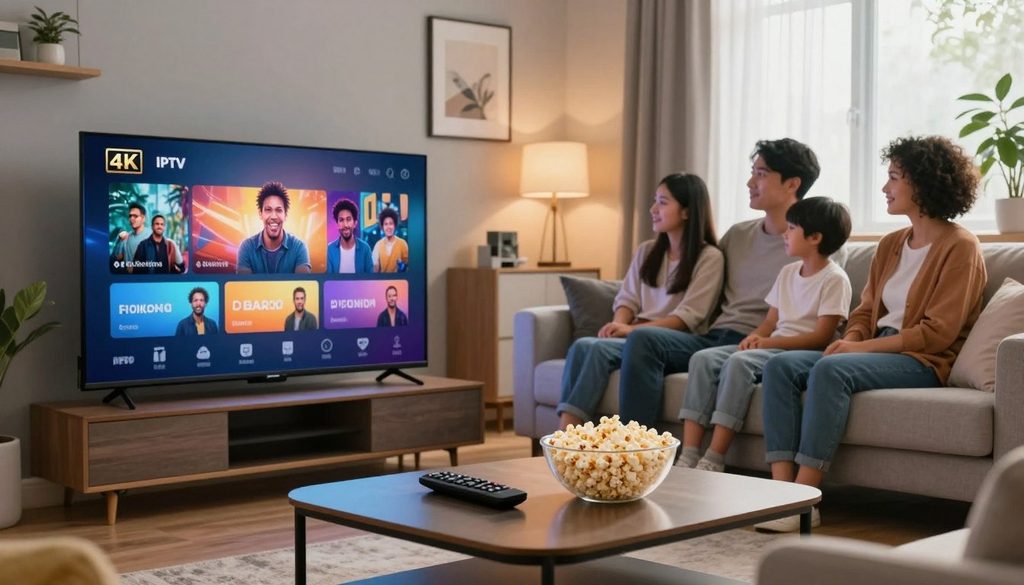
4K Live IPTV
Readers will learn how to assess channel quality on 4k live iptv and find compatible hardware. We explain simple installation steps and show how to find reliable options for steady performance. Whether you are new or upgrading, this overview helps you enjoy premium content without needless frustration.
Key Takeaways
- Understand the core benefits of high-definition digital streaming services.
- Learn how to verify compatibility with your existing home devices.
- Discover the essential steps for a successful and stable setup.
- Identify reliable service providers operating within the United States.
- Gain insights into optimizing your connection for the best visual quality.
How 4K Live IPTV Works in the United States
Advanced compression and fast data delivery let 4K Live IPTV bring cinema-grade visuals to your living room. It can rival traditional cable and satellite providers.
What 4K resolution means for live television streaming
4K resolution means a display has about 8 million pixels. That is four times the detail of standard 1080p Full HD broadcasts. For live television, this 4K streaming resolution gives viewers sharper images, deeper colors, and a stronger sense of depth.
How IPTV delivers live channels over an internet connection
Unlike traditional broadcast signals, IPTV over internet sends video data in small packets. Traditional signals travel through airwaves or coaxial cables. A server sends these packets directly to your device through your home network, enabling flexible, interactive television.
4K versus HD, Full HD, and standard-definition channel quality
These formats mainly differ in pixel count and the data needed to render images. Standard definition (SD) can look blurry on modern large screens, but 4K channel quality offers exceptional clarity. Full HD provides a solid middle ground, while 4K remains the gold standard for high-end sports and cinematic broadcasts.
Why internet speed, latency, and data limits affect playback
High-resolution streaming requires a stable, fast connection. High latency, or “lag,” can cause buffering, while internet service provider data caps may limit monthly viewing. A consistent connection is vital for uninterrupted viewing.
Recommended bandwidth for one 4K stream and multiple household devices
Experts generally recommend at least 25 Mbps download speed for one 4K stream. With multiple household devices running at once, aim for at least 100 Mbps. This keeps your live TV bandwidth sufficient while family members browse or game.
How adaptive bitrate streaming manages changing network conditions
Most services use adaptive bitrate streaming to prevent constant buffering. It detects your current network speed and adjusts video quality in real time. If the internet slows, the system slightly lowers resolution so the broadcast keeps playing smoothly without interruption.
Choosing Reliable 4K Live IPTV Channels and Services
Streaming services in the United States vary in quality and dependability. A reliable IPTV service needs strong technology that supports your daily viewing habits.
How to evaluate channel variety, local coverage, and live sports access
A strong provider should offer entertainment, news, and lifestyle programs. When checking IPTV channel variety, confirm that it includes your favorite networks.
IPTV local channels help viewers follow regional news and weather. Sports fans should also seek live sports IPTV packages with major leagues and few blackouts.
Checking stream stability, electronic program guides, and catch-up features
Consistent streaming creates a better viewing experience. A stable connection prevents freezes during games and blurry images at peak viewing times.
An electronic program guide (EPG) makes schedules easy to follow. Also, catch-up features let you watch missed programs and add value.
What to verify when researching 4k live iptv chromaiptv
When researching 4k live iptv chromaiptv, check feedback about server uptime and picture clarity. Also, confirm that dedicated servers support smooth 4K streams.
Using a free IPTV trial to test picture quality and service reliability
Testing a service before paying is a smart choice. A free IPTV trial shows whether stream quality works well on your home network.
What a free iptv trial should reveal before a paid subscription
During testing, notice how quickly channels load and whether the picture stays sharp. Check that the interface feels clear and EPG data stays accurate.
How to assess a free iptv trial ChromaIPTV offer and its terms
When you sign up for a free iptv trial chromaiptv, read its length and limits. Learn whether the trial becomes a paid subscription automatically, so you can manage billing.
Questions to ask about licensing, privacy, refunds, and customer support
Transparency matters when choosing a provider. Ask about IPTV licensing to confirm the service follows legal rules and supports long-term stability.
Ask how the provider protects your data and handles refunds if the service disappoints you. Reliable support through chat or email shows professional service.
Warning signs of unreliable or unauthorized IPTV providers
- Extremely low prices that seem too good to be true.
- Lack of a professional website or clear contact information.
- Frequent, unexplained service outages during major live events.
- Absence of secure payment methods or transparent refund policies.
These checks can help you secure a reliable IPTV service for better home entertainment. Research also helps you avoid common problems and enjoy quality streaming longer.
Compatible Devices and Home Streaming Requirements
Effective 4K streaming starts with the right IPTV compatible devices for your home setup. Your hardware must decode high-bitrate streams without stuttering. Meeting these needs creates a smoother viewing experience.
Smart TVs from Samsung and LG
Many viewers enjoy using apps built into their TVs. Samsung Smart TV IPTV setups often use third-party players from the Tizen app store. Similarly, LG Smart TV IPTV users can use webOS to access favorite channels directly.
Amazon Fire TV Stick 4K Max and Fire TV Cube
The Fire TV Stick 4K Max IPTV experience is a stable choice for cord-cutters. These devices have powerful processors that handle 4K streams with ease. The Fire TV Cube offers more processing power for demanding users.
Apple TV 4K and Android TV with Google TV
For a premium interface, the Apple TV 4K IPTV platform offers accurate colors and smooth navigation. Alternatively, Android TV IPTV devices, including Google TV models, provide great flexibility. These systems support specialized players that improve 4K playback.
Phones, tablets, Windows PCs, and Mac computers
Phones, tablets, and computers work well as secondary screens for live television. Most modern smartphones and laptops support high-definition decoding, but physical screen resolution may limit 4K playback. Dedicated apps help keep streams clear and synchronized.
Why Roku compatibility depends on the provider’s official application
Roku IPTV compatibility depends on the provider offering an approved app in the Roku Channel Store. Unlike open Android systems, Roku limits third-party player installations. Check for a dedicated Roku app before choosing a subscription.
Router placement, Ethernet connections, and Wi-Fi 6 performance
Your home network supports your entire streaming setup. Wi-Fi 6 IPTV technology can reduce interference in crowded residential areas. Place your router near the center of your home for stronger coverage.
Choosing Ethernet for consistent 4K playback
For 4K streaming, Ethernet remains the gold standard. A wired connection prevents latency spikes linked to wireless signals. Connect your main streaming device directly to the router for stable live sports and events.
Managing simultaneous streams across a United States household
Large households may need several streams at once. Make sure your internet plan has enough bandwidth for every device. Prioritizing your streaming hardware through your router’s Quality of Service (QoS) settings can protect performance during busy hours.
Setting Up and Testing a Smart IPTV Trial
Follow a clear sequence when completing the initial IPTV setup. First, confirm that your hardware supports high-definition streaming. A strong smart IPTV trial needs a stable internet connection and a compatible device.
Confirming subscription details and device compatibility
Confirm that your package includes the channels or content categories you want. Visit your provider’s official website to check support for devices like a Fire TV Stick or Android TV. This check helps prevent problems during activation.
Installing an official IPTV application or supported player
Download the recommended application from your device’s official app store. Avoid unverified files to protect system security. After installation, open the player and confirm it starts correctly on your television.
Entering account credentials and loading the electronic program guide
Enter your username and password carefully in the application settings. After login, the IPTV electronic program guide should fill with current channel listings. If it does not load, refresh the playlist or check your network.
Adjusting resolution, subtitles, audio, and parental-control settings
Open the playback menu to adjust your viewing settings. Choose 4K, 1080p, or a lower resolution based on your bandwidth. Set parental controls to limit mature content and protect everyone at home.
How to start a smart IPTV trial in the United States
Choose a reputable provider when starting a trial in the United States. Most services send an activation key or login link by email. Follow the provider’s instructions to activate your account after registration.
Testing a free trial IPTV service without entering payment information
Choose a free trial IPTV service that does not require a credit card. This lets you check stream quality before choosing a long-term plan. Prefer transparent services that help protect your financial data.
Using the “free trial IPTV – get 24 hours test without credit card” offer carefully
Use a free trial IPTV – get 24 hours test without credit card offer carefully. Test many channels at different times during the trial period. Do not share payment details when a provider demands them for a “free” trial.
Testing live channels, time-shift playback, and peak-hour performance
Switch among several live channels to test stream stability. Try time-shift and catch-up features to pause or rewind content. Test during peak evening hours to measure performance under heavy traffic.
Protecting account credentials, payment details, and viewing privacy
Protecting IPTV privacy supports a safer streaming experience. Never share your login details, and create a unique account password. If you pay later, use a secure payment method to protect personal information.
| Setup Phase | Action Required | Goal |
| Preparation | Verify device compatibility | Ensure hardware support |
| Installation | Download official player | Enable secure streaming |
| Configuration | Load program guide | Organize channel access |
| Testing | Check peak-hour speed | Confirm service reliability |
Conclusion
Choosing the right service requires technical preparation and careful provider research. Viewers seeking clear pictures and stable streams should match home network speed with quality hardware. Examples include the Apple TV 4K and Amazon Fire TV Stick 4K Max.
This guide covers everything you need to know about your iptv in the us during the digital television transition. Evaluating trial periods and checking transparent licensing practices protects users and their personal data.
A reliable 4K Live IPTV setup changes how households consume media across the United States. Stable performance requires a steady internet connection and official, supported apps on compatible smart devices.
Readers should test peak-hour performance and verify customer support options before choosing long-term plans. Informed choices create a better viewing experience that meets modern entertainment standards.
FAQ
What exactly is 4K live IPTV and how does it work for viewers in the United States?
4K live IPTV sends television over the internet, not satellite or cable, at 3840 x 2160 pixels. In the United States, services like ChromaIPTV use internet protocols to stream live channels to compatible devices. It needs high-speed internet to deliver four times the detail of standard 1080p Full HD broadcasts.
What is the recommended internet speed for streaming 4K live IPTV ChromaIPTV content?
For stable 4K live IPTV ChromaIPTV streaming without buffering, use at least 25 Mbps dedicated download speed per device. For a United States household with many connected devices, a 100 Mbps or faster plan is ideal. An Ethernet connection can lower latency and prevent interference during peak viewing hours on platforms like ChromaIPTV.
How to start a smart IPTV trial in the United States for the first time?
To start a smart IPTV trial in the United States, choose a reputable provider, such as ChromaIPTV. Check compatibility with devices like an Amazon Fire TV Stick 4K Max or Samsung Smart TV. Download an official app, such as IPTV Smarters Pro or TiviMate, and enter the unique M3U URL or Xtream Codes API credentials provided by the service to test the channel lineup and Electronic Program Guide (EPG).
Is it possible to find a free trial IPTV – get 24 hours test without credit card?
Yes, many premium providers offer a free trial IPTV – get 24 hours test without credit card. This free IPTV trial lets users check server stability and picture quality without financial commitment. Use these 24 hours to test live sports and local United States networks during busy periods, ensuring the service meets expectations.
Where can viewers find everything you need to know about your IPTV in the US regarding legal and privacy concerns?
When researching everything you need to know about your IPTV in the US, focus on the provider’s privacy policy and licensing transparency. Using a free IPTV trial ChromaIPTV lets users check whether the service requests excessive personal data or uses secure, encrypted connections. Protect viewing habits and payment information by choosing services with clear terms of service and dedicated customer support.
Which devices are most compatible with a free IPTV trial ChromaIPTV subscription?
A free IPTV trial ChromaIPTV works with many devices in American homes. Supported options include Apple TV 4K, Google TV, LG Smart TVs, and the Amazon Fire TV Cube. Roku may need official apps or screen mirroring, so Android-based devices or Nvidia Shield provide the smoothest 4K experience.
What should be tested during a free IPTV trial to ensure high-quality performance?
During a free IPTV trial, test channel switching speed (zapping), Electronic Program Guide (EPG) accuracy, and catch-up or time-shift features. Also verify 4K live IPTV streams during live sporting events. These events need high stability and low latency to prevent spoilers or frame-rate drops.

