
Today, we have many ways to watch TV at home. It’s hard to choose between IPTV, Netflix, and cable television. Knowing the difference between them is key to picking the best option for your home.
Each service has its own way of delivering shows and movies. Some like the steady stream of cable TV. Others prefer the flexibility of streaming services. Your choice depends on what you want to watch, like live sports or movies on demand, and how much you want to spend.
Edit
Full screen
Delete
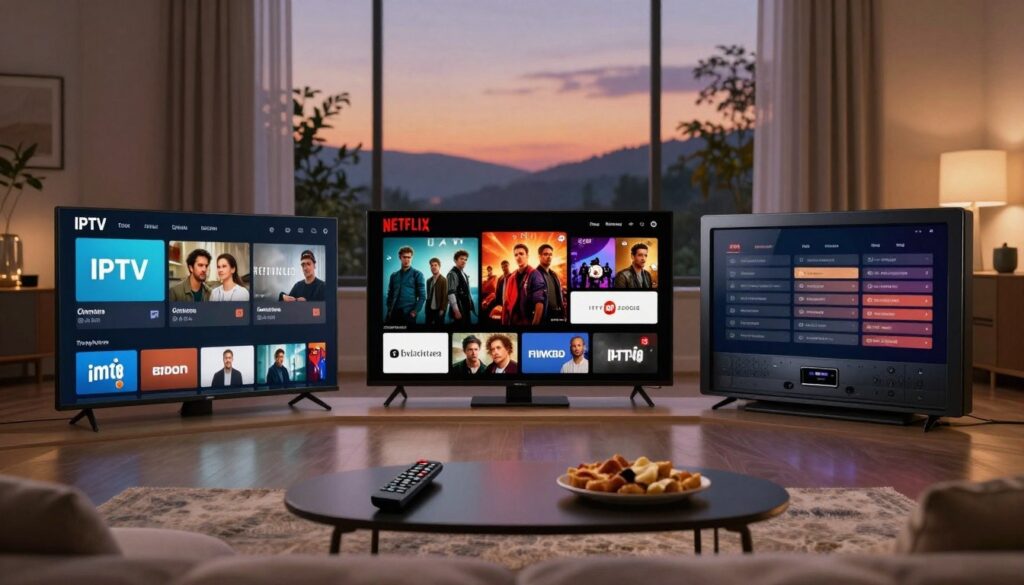
IPTV vs Netflix vs Cable: What’s the Difference?
This guide will help you understand the differences in price, channels, and picture quality. We’ll look at the good and bad of each to guide your decision. Whether you want live TV or can watch anywhere, finding the right choice is easier than you think.
Key Takeaways
- Traditional broadcast systems offer stable, scheduled programming for live events.
- Modern platforms like Netflix provide vast libraries of on-demand content for a monthly fee.
- IPTV utilizes internet protocols to deliver television signals directly to your devices.
- Choosing the right service depends on your personal viewing habits and budget.
- Consider factors like device compatibility and internet speed before making a final switch.
IPTV vs Netflix vs Cable: What’s the Difference?
Choosing between IPTV, Netflix, and cable can be tough without knowing the differences. They all bring entertainment to your home, but in different ways. Knowing the iptv vs netflix vs cable: what’s the difference? helps you pick the best for your home.
How IPTV, Netflix, and Cable Deliver Television Content
Cable uses a network of cables from your local provider. IPTV sends content over your internet connection. This makes it easy to watch on any device.
Netflix is a cloud-based service that streams content over the internet. It focuses on on-demand television, not broadcast signals. This change marks a shift to digital streaming.
Live Channels, On-Demand Libraries, and Scheduled Programming
Cable and IPTV offer scheduled programming for live events. This is great for sports fans and those who love live TV.
Netflix is perfect for binge-watching. It has a huge library of content available anytime. You choose between the guide of cable or Netflix’s on-demand freedom.
Why the Right Choice Depends on Viewing Habits
Your viewing habits should guide your choice. If you want variety and live events, try Chromaiptv. A free iptv trial chromaiptv can help you see if it fits your needs.
The best choice balances cost, convenience, and content. Whether it’s cable or streaming, knowing your habits ensures you get the most from your subscription. Always remember to check the service provider’s quality for a good viewing experience.
How IPTV, Netflix, and Cable Services Work
The way your home entertainment system works depends on your provider. When you ask iptv vs netflix vs cable: what’s the difference?, it’s key to know each service has its own way to get content to you.
IPTV Streaming Through an Internet Connection
IPTV uses your internet to send TV signals. It’s different from old ways of watching TV because it sends data packets over the internet to your device.
Live IPTV Channels and On-Demand Programming
IPTV gives you both live TV and lots of on-demand shows. You can watch live IPTV channels like regular TV and also pick from a huge library of shows and movies.
- Real-time broadcast of news and sports.
- Instant access to archived shows and movies.
- Interactive menus for easy navigation.
This method is very flexible. You can watch these services on your Smart TV, mobile devices, or a special box from the service.
Netflix as a Subscription Video-on-Demand Platform
Netflix is a Netflix subscription video-on-demand service. It’s different from regular TV because you pick what you want to watch anytime.
Original Series, Movies, and Licensed Content
Netflix is known for its Netflix originals, made just for its viewers. It also has a changing selection of movies and shows from other studios.
What Netflix Does Not Provide for Live Television
Remember, Netflix isn’t a replacement for live TV. You won’t find live news, local weather, or scheduled sports on the platform.
Cable Television Through a Traditional Provider Network
A cable television provider uses its own network of cables to deliver TV. This network is separate from your internet, making your viewing stable.
Channel Packages, Cable Boxes, and Provider Equipment
To get these services, you need a cable box at home. Providers offer different channel packages. You can pick what fits your budget and interests.
Cable On-Demand and DVR Features
Today’s cable systems do more than just show scheduled TV. Most offer on-demand libraries and DVRs. This lets you pause, rewind, or record shows for later.
Channel Selection and Content Variety Compared
The world of home entertainment is vast. The variety of channels you get depends on your provider. Knowing what each platform offers helps families choose the right subscription for their viewing habits.
What Viewers Typically Get With IPTV
Local Channels, National Networks, Sports, and International Programming
IPTV channel selection offers a wide range of content. You get local news, major networks, and entertainment. It also has live sports for sports fans who can’t miss a game.
These services also provide a lot of international programming. This is great for those who want to watch global news or cultural content.
How Channel Availability Can Vary by Provider and Location
Channel lineups are not the same everywhere. What you can watch depends on your provider and where you live in the U.S.
Some people try a free iptv trial to see if they get their favorite local stations. Always check the provider’s channel list for your area before you sign up.
Netflix’s Strength in On-Demand Entertainment
Movies, Series, Documentaries, and Netflix Originals
The Netflix content library focuses on on-demand viewing. It has a huge selection of movies, series, and documentaries.
A big plus is the Netflix Originals. These exclusive shows and movies can’t be found anywhere else, making Netflix special.
Regional Catalog Differences in the United States
Even though Netflix is consistent, its U.S. catalog can change. Some titles might not be available in certain areas due to licensing agreements.
Cable’s Advantage in Live Television and Specialty Networks
News, Live Sports, Local Stations, and Premium Channels
Traditional cable channels are best for live events. They offer reliable access to live sports, news, and local weather.
Premium add-ons let you get movie channels and niche networks together. This is good for families who like to watch a variety of shows without changing channels.
Evaluating Channel Packages Against Actual Household Viewing
Cable providers offer different packages. It’s smart to check what you watch to avoid paying for channels you don’t use.
Comparing Content Categories in a Practical Table
| Category | IPTV | Netflix | Cable |
| Live Sports | High | None | Very High |
| On-Demand Movies | Moderate | Excellent | Moderate |
| Local News | High | None | High |
| Original Content | Low | Very High | Low |
Pricing, Contracts, and the Real Monthly Cost
Getting the real cost of home entertainment means looking beyond the initial price. The headline rates might attract you, but the real monthly cost often includes hidden charges. These fees can change over time.
Typical IPTV Pricing and Possible Extra Fees
Subscription Plans, Device Costs, and Installation Considerations
IPTV pricing models are usually flexible, with no long-term commitments. However, you’ll need to pay for hardware like streaming boxes or smart devices. These are not always included in the basic subscription.
Setting up IPTV is usually a DIY job, so there are no professional setup fees. However, check if your internet service provider has data caps. These can lead to extra charges when streaming in high definition.
What to Check During a Free IPTV Trial
Many providers offer a free IPTV trial to show off their service. When trying out chromaiptv, check the stream quality during busy times. Make sure the channel lineup fits your needs.
Before you commit, read the fine print of any free iptv trial chromaiptv offer. Ensure your payment info is safe and there are no hidden auto-renewal clauses. These can start right after the trial ends.
Netflix Plans, Household Access, and Add-On Costs
Comparing Streaming Tiers, Advertisements, and Picture Quality
Netflix plans come in different tiers, with prices based on video quality and how many screens you can watch at once. The cheapest plans have ads, while the pricier ones offer 4K and no ads.
Account Sharing and Additional-Member Charges
Sharing Netflix passwords with people outside your household now costs extra. Think if the benefits of sharing an account are worth the extra monthly fee for each person.
Cable Bills, Promotional Rates, and Long-Term Contracts
Equipment Rentals, Broadcast Surcharges, and Regional Sports Fees
The cost of a cable bill often hides taxes and extra fees. You’ll face big equipment fees for DVR boxes and remotes. These can greatly increase your monthly bill.
Also, regional sports fees and broadcast surcharges are common. They make your bill higher, even if you don’t watch those channels.
How Introductory Pricing Can Change the Final Cost
Providers use promotional pricing to get you to sign up for long-term contracts. After the introductory period, the price often goes up. This can be much higher than the initial offer.
Building a Fair Monthly Cost Comparison
Comparing One Service With a Multi-Service Streaming Setup
To find the best value, compare a single cable package to a mix of streaming services. Often, combining different platforms gives you more content for less money than a traditional bundle.
Calculating Cost Per Channel and Cost Per Regularly Watched Title
When looking at streaming costs, focus on what you actually watch. Instead of counting all channels, calculate the cost per title you watch regularly. This shows which service gives you the most value.
| Service Type | Contract Length | Hidden Fees | Flexibility |
| IPTV | Month-to-Month | Low | High |
| Netflix | No Contract | None | Very High |
| Cable | 12-24 Months | High | Low |
Picture Quality, Reliability, and Internet Requirements
When looking at iptv vs netflix vs cable: what’s the difference?, how well it works is key. The quality of the image and the connection’s stability make a big difference. A good service should make watching smooth and enjoyable.
Resolution and Streaming Quality Across the Three Options
HD, Full HD, and 4K Availability
Today, most services offer high-definition content. Netflix 4K plans give you sharp visuals if your device can handle it. IPTV also offers high-quality streams, but the quality can vary a lot.
Bitrate, Compression, and Device Compatibility
IPTV picture quality depends a lot on bitrate and compression. High compression can cause problems in fast scenes. Cable TV, on the other hand, has a steady, high-bandwidth signal that avoids these issues.
How Internet Speed Affects IPTV and Netflix
Recommended Connection Performance for Multiple Screens
Your internet speed for streaming needs to match your household’s needs. A single 4K stream needs at least 25 Mbps. But, with more devices, you’ll need more speed. A fast fiber or cable plan is best for big households.
Buffering, Congestion, Wi-Fi Problems, and Data Caps
Streaming problems often come from a slow connection. Buffering happens when your connection can’t keep up. Bad Wi-Fi performance or network congestion can also hurt your signal. And, data caps can limit how much you can watch each month.
When Cable Provides More Consistent Service
Weather, Network Outages, and Provider Infrastructure
Despite streaming’s rise, cable reliability is still a big plus for many. Cable signals go through dedicated lines, not the public internet. So, they’re less affected by weather or internet outages. This means you can always watch your favorite shows.
Why Cable Can Still Appeal to Homes With Unreliable Internet
For families with unreliable internet, cable is a good choice. It doesn’t need a fast internet connection. This makes it a stable option for watching TV, especially if you value consistent quality over internet flexibility.
Flexibility, Devices, and Everyday User Experience
Today, watching TV is all about how well a service fits into your home’s tech. Whether you like using a remote or a mobile app, how easy it is to use matters a lot. Knowing how different platforms work with your devices is key for a great viewing experience.
Watching IPTV Across Smart TVs and Streaming Devices
IPTV services work well with many devices. They support IPTV compatible devices, from big TVs to small media players.
Smart TVs, Amazon Fire TV, Roku, Apple TV, and Android Devices
Most Smart TV streaming platforms let you install apps easily. Devices like Amazon Fire TV and Roku sticks offer a familiar feel. They work best for watching high-definition live shows.
Account Access, Remote Controls, and App Availability
Getting into these services is simple, with just a login or QR code. Some like using a physical remote, while others prefer their phones. Try a free iptv trial to see if it works on your device.
Netflix’s Simple Multi-Device Viewing Experience
Netflix is known for being easy to use on many devices. Its design makes finding new shows and movies easy, no matter the screen size.
Profiles, Recommendations, Downloads, and Parental Controls
Netflix is great at making things personal with individual profiles. It also lets you download shows for offline watching. Plus, it has strong parental controls for families.
Watching at Home, While Traveling, and on Mobile Devices
Netflix mobile viewing is top-notch on phones and tablets. You can start watching on TV and finish on your phone. This makes it perfect for busy lives.
Cable Equipment and Traditional In-Home Viewing
Many still prefer traditional cable for its dedicated setup. This usually means a central box that handles all signals.
Cable Boxes, DVRs, Mobile Apps, and Whole-Home Service
The cable DVR is great for recording and storing shows. Many providers offer whole-home solutions for watching recorded content anywhere. Mobile apps are available but limited.
Installation Requirements and Limitations Outside the Home
Cable services need a pro install and a physical connection. Unlike streaming, cable is tied to your home address. This limits watching outside your home.
Comparing Pause, Replay, Recording, and Offline Features
Services differ in how they handle pausing, replaying, recording, and offline watching. The table below shows the main differences.
| Feature | IPTV | Netflix | Cable |
| Live Pause/Replay | Commonly Supported | N/A (On-Demand) | Standard via DVR |
| Cloud Recording | Often Included | Not Applicable | Hardware-Based |
| Offline Viewing | Rarely Available | Fully Supported | Limited/App-Based |
| Device Portability | High | Very High | Low |
Legality, Privacy, and Provider Safety Checks
Choosing a streaming service means you must think about your digital safety. It’s important to make sure the provider follows the law. Many people forget about the technical side of service authorization. Yet, these details affect the quality and safety of your entertainment at home.
Why IPTV Legality Depends on Content Licensing
The heart of IPTV legality is whether a provider has the right to show the content they offer. Legit services get IPTV content licensing from networks and studios. This lets them legally stream TV shows to their subscribers.
Questions to Ask About Channel Rights and Service Authorization
Before you commit, check if the service is allowed to show the channels they offer. Ask if they have a clear business model. Also, see if they list their licensing partnerships on their website.
Warning Signs of Unlicensed IPTV Operations
Be careful of services that seem too cheap. Look out for signs like poor customer support, secret payment methods, and no real business address. These are unlicensed IPTV warning signs.
How to Evaluate a Free IPTV Trial
Trying a service before you pay is wise. But, make sure the free IPTV trial safety is a priority. A good provider will be open about what the trial includes and how they handle your data.
What a Free IPTV Trial From ChromaIPTV Should Clearly Explain
A free IPTV trial chromaiptv should tell you what you get. ChromaIPTV should say which channels are included. They should also explain if the trial turns into a paid subscription.
Payment Details, Cancellation Terms, Data Requests, and Support
When you sign up for a trial, look for clear information. Make sure the provider explains:
- The exact payment details and billing cycles.
- Simple cancellation terms that are easy to follow.
- How they handle data requests and keep your privacy.
- The availability of good customer support.
Privacy and Security Risks Across Streaming Services
Keeping your streaming privacy is crucial today. Be careful about how your personal info is stored and used by any platform.
Official Apps, Secure Payments, and Software Updates
Use official apps from trusted stores to get software updates. Also, choose platforms that offer secure streaming payments to protect your money.
Protecting Login Credentials and Avoiding Suspicious Downloads
Don’t share your login info with others or unknown people. Stay away from downloading software from untrusted sources. These files can harm your network security.
Why Cable and Netflix Usually Have More Established Consumer Protections
Big names like cable providers and Netflix have strong consumer protection. They have clear billing systems, dedicated support, and tested apps. These features help reduce the risks of smaller or unregulated services.
Which Television Service Fits Different U.S. Households?
Every household in the United States has its own needs for entertainment. It’s important to find a service that balances cost, variety of content, and reliability. This ensures a great viewing experience.
When IPTV May Suit Viewers Who Want Broad Live-Channel Access
IPTV for U.S. households is great for those who want lots of channels. It uses your internet to stream content directly to your devices.
Households With Fast Internet and International Programming Needs
If you need international TV programming not found in standard packages, IPTV is a good choice. It connects you to global content easily.
Viewers Who Value Flexible Device Access
For those who stream on tablets, smartphones, and smart TVs, IPTV is flexible. A free iptv trial can help you see if it works for you before you commit.
When Netflix May Be the Better Choice for On-Demand Entertainment
For many, the old channel guide is outdated. Netflix for movies and series offers a simple way to watch high-quality content anytime.
Movie and Series Viewers Who Rarely Watch Live Television
If you don’t watch live TV often, Netflix is a cost-effective choice. It has a vast library of original and licensed content for binge-watchers and film lovers.
Homes Seeking Simple Apps and Predictable Streaming Features
Netflix is easy to use and works well on most devices. It simplifies watching TV by removing the need to manage schedules or find channels you don’t watch.
When Cable May Remain Practical
Even with digital options, traditional providers still offer value to some.
“The reliability of a dedicated network remains a cornerstone for families who prioritize consistent access to live events,” notes industry analysts.
Sports Fans, Local News Viewers, and Families Wanting Traditional Channels
For those who need cable for sports and local TV channels, traditional TV is best. It ensures you catch live games and news without internet issues.
Homes That Prefer Bundled Television, Internet, and Phone Service
Many families like the ease of a bundled TV internet phone package. It simplifies billing and can save money, making it hard to beat separate subscriptions.
When Combining Services Makes More Sense Than Choosing One
Most households find a mix of services works best. Combining a basic plan with streaming subscriptions lets you customize your entertainment to fit your budget and interests.
| Service Type | Best For | Key Benefit |
| IPTV | Global Content | Broad Channel Access |
| Netflix | On-Demand | Ease of Use |
| Cable | Live Events | Reliability |
Conclusion
Choosing the right entertainment platform is all about knowing what you need. It’s important to understand the differences between IPTV, Netflix, and cable. This helps you decide what matters most to you, like live sports, movies, or local news.
When you compare TV services, you’ll see that each has its strengths. Netflix and cable have different things to offer. Netflix is great for on-demand movies, while cable gives you live sports and news.
Looking at IPTV, it’s key to check your internet speed and the provider’s licensing. Many people choose a mix of streaming and live channels. This mix often gives the best experience for families today.
Before you sign up, think about your budget and what devices you use. Make sure your viewing habits are private and secure. Your ideal setup is where cost, variety, and quality meet.
FAQ
IPTV vs Netflix vs cable: what’s the difference?
IPTV, Netflix, and cable differ in how they deliver content. Cable uses a physical network for scheduled shows. Netflix streams movies and series online. IPTV offers both live channels and on-demand content over the internet.
How can a viewer test the quality of an IPTV service before subscribing?
Many try a free iptv trial to see if it works well. For example, a free trial with chromaiptv lets you check channels, interface, and streaming quality. This way, you can decide without spending money.
Which devices are compatible with IPTV and Netflix compared to traditional cable?
Netflix and IPTV work on many devices like Smart TVs and Android devices. Cable, however, needs special boxes and wiring for each TV. Some providers now offer apps for mobile viewing.
What are the internet requirements for high-definition streaming?
For HD streaming, you need a fast and stable internet connection. IPTV and Netflix require it for smooth streaming. Cable doesn’t face internet issues, but streaming services can buffer if the internet is slow.
Does Netflix offer live sports and local news like cable or IPTV?
No, Netflix doesn’t have live sports or local news. It focuses on licensed content and original shows. For live events, people often choose cable or IPTV services.
Are there hidden costs associated with cable that streaming services avoid?
Cable bills can have extra fees for DVRs and sports packages. Streaming services like Netflix usually have clear prices without hidden costs. But, always check if a service is legal during a free trial.
Is it possible to record shows on IPTV or Netflix?
Netflix lets you download some shows for offline viewing. But, it doesn’t record shows like cable does. IPTV services often have a “catch-up” feature for recording shows.


