
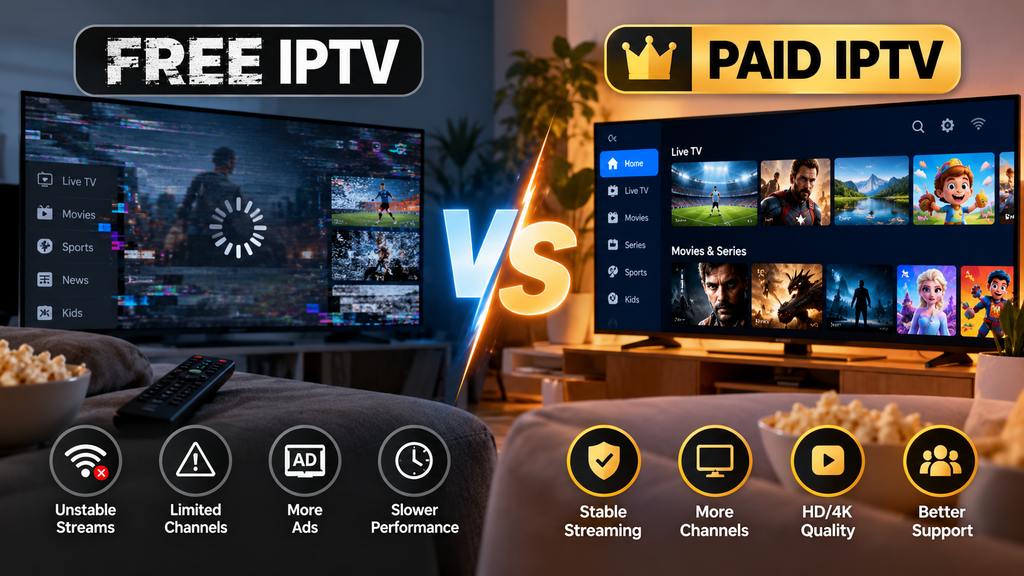
Free IPTV services offer no-cost access to live TV and on-demand content but often come with unreliable streams, limited channels, intrusive ads, and legal risks. Paid IPTV services, like ChromaIPTV, provide stable servers, wider channel libraries, customer support, and legal content sourcing. Most reputable paid providers also offer a free IPTV trial, letting you compare quality before committing to a subscription.
Streaming has changed how people watch television, and IPTV (Internet Protocol Television) sits at the center of that shift. Instead of relying on cable boxes or satellite dishes, IPTV delivers live channels and on-demand libraries straight through your internet connection. But as IPTV has grown in popularity, so has the debate between free and paid options.
On the surface, free IPTV sounds like the obvious choice. Why pay for something you can get at no cost? The reality is more complicated. Free services often struggle with buffering, security risks, and shaky legal footing, while paid providers invest in infrastructure that keeps your stream stable and your data protected.
This guide breaks down the real differences between free and paid IPTV in 2026, so you can decide which option actually fits your viewing habits, budget, and risk tolerance.
What is IPTV, and how does it actually work?
IPTV delivers television content over the internet rather than through traditional broadcast, cable, or satellite signals. When you stream a channel through an IPTV service, your device requests the data from a server, which then transmits it to you in real time. This is the same basic principle behind platforms like Netflix or Hulu, just applied to live TV channels and broader content bundles.
The quality of that experience depends heavily on the provider’s backend: how many servers they operate, how well those servers are maintained, and how much bandwidth they allocate per user. This is exactly where the gap between free and paid IPTV becomes obvious.
What’s the difference between free IPTV and paid IPTV?
Free and paid IPTV services aim to solve the same problem, streaming live TV, but they differ sharply in execution. Here’s a breakdown across the factors that matter most to viewers.
How reliable is free IPTV compared to paid IPTV?
Free IPTV services are typically built on limited server capacity. Because thousands of users may be pulling from the same overcrowded servers, buffering, freezing, and dropped connections are common, especially during peak viewing hours or live sporting events.
Paid IPTV providers, by contrast, invest in dedicated server infrastructure designed to handle concurrent streams without degrading quality. This is one of the clearest, most measurable differences between the two models: you’re paying for consistency, not just content.
Is free IPTV legal and safe to use?
This is where free IPTV runs into the most serious problems. Many free IPTV services source content without proper licensing agreements, which puts users in a legal gray area, or in some cases, outright violation of copyright law. Beyond the legal risk, free IPTV apps and websites are also known vectors for malware, since they often require sideloading apps from unverified sources or clicking through ad-heavy, unregulated websites.
Paid IPTV services that operate transparently and license their content legally eliminate much of this risk. Choosing a provider if you want peace of mind in 2026 means doing some research into licensing practices, not just comparing channel counts.
How many channels and content options does each offer?
Free IPTV services tend to offer a smaller, less consistent channel lineup. Channels may disappear without notice if the underlying source is taken down or if licensing disputes arise. Paid IPTV providers generally offer larger, more stable channel libraries spanning sports, international content, movies, and on-demand libraries, because they have formal agreements in place to keep that content available.
What kind of customer support can you expect?
Free IPTV services rarely offer any customer support at all. If your stream goes down or a channel stops working, you’re on your own. Paid services, particularly established ones, typically provide customer support channels like live chat, email, or ticketing systems to resolve issues quickly. For anyone who relies on IPTV daily, this difference alone can justify the cost of a subscription.
How do ads and user experience compare?
Free IPTV platforms often rely on aggressive advertising to generate revenue, since they aren’t charging subscription fees. This can mean pop-ups, forced redirects, and cluttered interfaces that interrupt the viewing experience. Paid IPTV services are ad-light or ad-free, since the subscription fee itself funds the service, resulting in a cleaner, more polished interface.
Why do people still choose free IPTV despite the drawbacks?
Cost is the obvious answer. For casual viewers who only want occasional access to live TV, free IPTV can feel like a reasonable trade-off. Some users also treat free services as a short-term solution while they research which paid provider to commit to long-term.
That said, the hidden costs of free IPTV, security risks, inconsistent streaming, and legal exposure, often outweigh the money saved. Choose free IPTV if you’re only testing the waters with casual, infrequent viewing and are comfortable with inconsistent quality. Choose a paid service if reliability, legal content sourcing, and support matter more to you than saving a subscription fee.
How can you test a paid IPTV service before committing?
This is where a free IPTV trial becomes valuable. Rather than choosing between a risky free service and an unverified paid subscription, a free IPTV trial lets you evaluate a paid provider’s streaming quality, channel lineup, and interface before you spend any money. Most reputable IPTV providers, including ChromaIPTV, offer a free IPTV trial specifically so users can compare performance against free alternatives without committing upfront.
When testing a trial, pay attention to:
- Stream stability: Does the video buffer or freeze during peak hours?
- Channel variety: Are the channels you actually watch included?
- App compatibility: Does it work smoothly on your preferred device, whether that’s a smart TV, Fire Stick, or mobile phone?
- Support responsiveness: If something goes wrong during the trial, how quickly does support respond?
This hands-on approach gives you real data instead of relying on marketing claims alone.
How do you choose the right IPTV provider for your needs?
Picking the right provider means weighing your viewing habits against what each service actually delivers. If you’re unsure where to start, our guide, Best IPTV Service 2026: How to Choose the Right IPTV Provider, walks through the specific criteria worth evaluating, from server reliability to channel diversity to pricing structures, so you can make an informed comparison rather than guessing based on advertising alone.
If you’re specifically curious about how ChromaIPTV performs against these criteria, CHROMAIPTV Review 2026 takes a closer look at the service’s channel lineup, streaming performance, and overall value, giving you a clearer picture of what to expect before you sign up.
Free IPTV vs paid IPTV: which one is right for you?
Free and paid IPTV solve the same basic problem, streaming live television over the internet, but they do it in fundamentally different ways. Free IPTV appeals to budget-conscious, casual viewers who can tolerate inconsistent streams and limited support. Paid IPTV, meanwhile, is built for viewers who want reliability, broader content libraries, legal peace of mind, and responsive customer service.
If you’re on the fence, the smartest move is to sign up for a free IPTV trial with a reputable provider like ChromaIPTV and compare the experience directly against whatever free service you’ve been using. That side-by-side comparison will tell you more about which option fits your needs than any feature list could.
Frequently Asked Questions
Is free IPTV actually free, or are there hidden costs?
Free IPTV doesn’t usually charge a subscription fee, but it often comes with hidden costs in the form of security risks, aggressive advertising, and potential legal exposure from unlicensed content. Some free services also require purchasing third-party hardware or apps to access content, adding unexpected expenses.
How much does paid IPTV typically cost?
Pricing varies by provider and the size of the channel package, but most paid IPTV services charge a monthly or annual subscription fee. Costs depend on factors like channel count, number of simultaneous streams allowed, and included on-demand content.
Is paid IPTV always legal?
Not automatically. Legality depends on whether the provider has proper licensing agreements for the content it distributes. This is why researching a provider’s sourcing practices, not just its price point, matters before subscribing.
What are the risks of using free IPTV long-term?
Long-term risks include exposure to malware through unverified apps, potential legal consequences from accessing unlicensed content, and a consistently unreliable viewing experience due to overloaded servers.
Can I try a paid IPTV service before paying for a full subscription?
Yes. Many paid providers, including ChromaIPTV, offer a free IPTV trial that lets you test stream quality, channel selection, and app performance before committing to a paid plan.
Who should choose free IPTV over paid IPTV?
Free IPTV may suit casual viewers with minimal streaming needs who are comfortable with inconsistent quality and limited channel access. Anyone who watches live sports regularly, streams daily, or wants dependable support is better served by a paid provider.

