
Modern TV has moved away from old cable wires and satellite dishes. An iptv service brings high-quality shows right to your home internet. This new tech uses digital streams, giving viewers more control over what they watch.

iptv service
The system works by sending data packets from a central server to your device. It combines live TV, movies on demand, and interactive apps into one easy-to-use interface. Understanding how this platform operates is key for anyone wanting to improve their home entertainment.
Before picking a provider, there are important things to consider. Look for reliable connection quality, legal content, and data privacy. Make sure your device is compatible with the provider to avoid any issues.
Key Takeaways
- Television content is now delivered via internet protocols rather than traditional cables.
- Viewers gain access to both live broadcasts and on-demand libraries through a single interface.
- A stable internet connection is the foundation for a smooth viewing experience.
- Legal licensing and data privacy are vital considerations when selecting a provider.
- Always verify that your hardware supports the specific streaming application before signing up.
What Is an iptv service?
Internet Protocol Television changes how we watch our favorite shows. It uses the internet to send video data to your device. This is different from traditional signals.
Definition of Internet Protocol Television
Internet Protocol Television uses the internet to deliver TV services. It’s more interactive and personalized than old methods. Your internet connection becomes a gateway to endless entertainment.
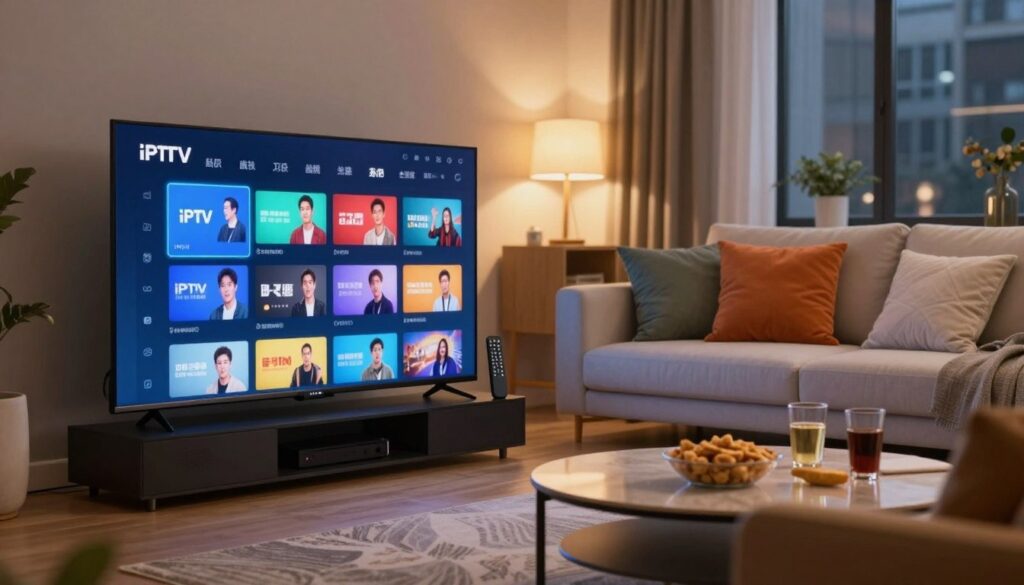
Internet Protocol Television
How IPTV differs from cable, satellite, and traditional broadcast TV
Old TV systems use cables or satellite dishes to send signals. They broadcast many channels at once. This means you can’t control when you watch your favorite shows.
An IPTV service sends content only when you want it. This lets you pause, rewind, or start shows anytime. It’s not limited by physical towers or satellite lines.
Common types of IPTV content and subscriptions
Providers offer a wide range of digital content. This includes live TV and video-on-demand libraries. You can watch movies and series whenever you want.
- Live TV: Real-time broadcasts of news, sports, and entertainment.
- Video on Demand (VOD): A catalog of content available for instant playback.
- Time-Shifted Media: Features like catch-up TV that allow you to watch past broadcasts.
Subscription options vary a lot. You can choose from monthly plans to packages based on channel count. This lets you pick what fits your budget and interests. It’s a flexible alternative to traditional TV contracts.
How an IPTV Service Delivers Television Over the Internet
Ever wondered how your favorite shows get from the studio to your TV? It’s all thanks to advanced technology. This tech turns raw media into digital files that travel the world to your home.
Content acquisition from live channels and video libraries
The journey starts with grabbing video signals from different places. Providers use satellites, antennas, or fiber-optic cables to get these signals.
They also have huge video-on-demand libraries on servers. These libraries are full of movies, series, and more, ready for you to watch anytime.
Encoding, compression, and conversion into internet-ready streams
Next, the content is made ready for the internet. Big video files are too big to stream easily. So, they go through encoding and compression to shrink them down.
This process keeps the video quality high but makes the files smaller. They’re then changed into formats like H.264 or H.265 for smooth streaming.
Content delivery through servers, apps, and streaming protocols
After shrinking, the content goes to powerful servers. These servers use special protocols to break the video into smaller pieces.
These pieces are then sent to your streaming app. The app makes sure everything arrives in the right order for a smooth watch.
Why bandwidth and network latency affect playback
Your stream’s quality depends on your network. Bandwidth is how much data your internet can handle. Latency is how long it takes for data to get from the server to you.
If your bandwidth is too small, you’ll get annoying buffering. High latency can make live streams feel off-sync.
How the viewer’s device requests and displays each stream
When you pick a channel, your device asks the server for it. The server sends the video segments to your player.
Your device then plays these segments live on your screen. This whole process happens fast, making it easy to switch between shows.
The Main Components Behind IPTV Streaming
High-quality digital media needs a smooth mix of servers, software, and special hardware. This setup is key for modern TV, making sure data gets to viewers without delay.
IPTV content servers and hosting infrastructure
Content servers are at the core, storing video libraries and live feeds. They’re in big data centers for maximum uptime and fast data access. Distributed hosting helps reduce lag and stops buffering during busy times.
Electronic program guides, playlists, and account authentication
The Electronic Program Guide (EPG) makes finding channels easy. Playlists guide the player to the right streams. Secure account authentication checks who gets to watch, keeping content safe.
Streaming applications, media players, and compatible devices
Users enjoy IPTV through apps on their devices. Whether it’s a smart TV, phone, or computer, the media player shows the video. This lets users watch on many compatible devices, without old cable boxes.
The role of an iptv encoder box in live content distribution
For live TV, special hardware is needed to keep quality over the internet. An iptv encoder box is key, turning raw video into internet-ready formats. Without it, high-definition live TV wouldn’t work on regular home internet.
Live TV, Video on Demand, and Time-Shifted Programming
It’s key to know the difference between live, on-demand, and time-shifted programming for cord-cutters. These methods shape how we watch our favorite shows and movies online.
How live IPTV channels are streamed in real time
Live streaming captures a broadcast signal and breaks it into small data packets. These packets then travel over the internet to your device. There, they’re put back together for instant viewing.
This process is almost instant, letting you watch sports, news, and live events as they happen. Low latency is crucial to keep the stream in sync with the event.
How video-on-demand libraries are stored and delivered
Video-on-demand (VOD) is different from live TV because it uses pre-recorded content stored on servers. When you pick a title, the server starts a stream just for you.
This approach offers more flexibility. You can pause, rewind, or start over whenever you want. Since the content is stored, providers can offer high-quality streams without the bandwidth issues of live broadcasts.
Catch-up TV, pause functions, and digital video recording features
Time-shifted programming lets you watch shows on your own schedule. Catch-up TV lets you watch shows from the past few days, so you don’t have to be home at a specific time.
Many services also have pause functions and cloud DVR. These features let you save live shows to watch later, so you never miss out.
Why channel availability and content rights vary by provider
Not all channels are available everywhere because of licensing agreements. Providers need to get legal rights to show certain networks in certain areas.
These agreements can limit channel options in different places. This means a service might have a wide range of channels in one area but fewer in another, due to strict copyright rules.
| Feature | Live TV | Video on Demand | Time-Shifted |
| Delivery Method | Real-time stream | Stored file access | Delayed playback |
| User Control | Limited | Full playback control | High control |
| Content Type | Sports, News, Events | Movies, Series | Past broadcasts |
| Storage | None | Server-side | Cloud DVR |
What an iptv encoder box Does in a Streaming System
An IPTV encoder box is key in turning raw video into digital streams for home viewing. It takes high-quality feeds from cameras or satellite dishes. Then, it prepares them for global network distribution.
Capturing and converting video signals for internet delivery
This device’s main job is to take video signals and make them web-ready. Without this, the data would be too big for the internet. The encoder makes the file smaller while keeping the video quality good.
Hardware encoding compared with software-based encoding
There’s a choice between hardware and software for encoding. Hardware encoding uses a special machine for processing. It’s stable and fast, perfect for live events.
Software-based encoding uses a computer or server. It’s flexible and easy to update but can be resource-heavy. Here’s a comparison of the two.
| Feature | Hardware Encoder | Software Encoder |
| Performance | High and stable | Variable |
| Flexibility | Limited | High |
| Cost | Higher initial investment | Lower entry cost |
| Reliability | Excellent for 24/7 use | Dependent on OS stability |
Important encoder features, including resolution, bitrate, and protocol support
Engineers set up several technical settings for a good viewing experience. Resolution affects image quality, and bitrate controls data flow. Finding the right balance prevents buffering and keeps the stream clear on all screens.
The device also needs to support certain streaming protocols. Protocols like HLS or RTMP help video packets reach viewers reliably. The right protocol ensures compatibility with many devices.
When home viewers need an encoder and when they do not
Most people don’t need an encoder box for everyday TV watching. If you’re just using a service, your smart TV or streaming stick will handle decoding. You only need an encoder if you’re broadcasting your own content live.
Understanding ChromaIPTV and Other IPTV Service Providers
Digital TV is complex, and knowing how providers work is key. iptv service chromaiptv is a name you might see often. It’s important to look beyond the hype to get a good viewing experience.
How a provider such as ChromaIPTV may organize channels and content
Good providers organize content well. For example, chromaiptv sorts channels by type, like sports or news. This makes it easy to find what you want without getting lost.
Questions to ask about supported devices, service regions, and reliability
Make sure the service works on your devices before signing up. Check if it supports your smart TV, streaming stick, or mobile apps. Also, see if it’s available in your area to avoid connection problems.
Reliability is crucial. Look into server uptime and maintenance updates. A good provider will have a status page or clear support channels.
Why provider claims should be checked against licensing and customer policies
It’s important to read the fine print on content rights and privacy. Legit providers have clear licensing deals with content creators. Also, check the refund policy and terms of service to know your rights.
Distinguishing a legitimate subscription from an unauthorized streaming operation
Legit services are open and have good customer support. Unauthorized services often lack clear contact info and can vanish without warning. Always choose providers that follow the law and protect your data.
| Feature | Legitimate Provider | Unauthorized Service |
| Licensing | Fully Licensed | Often Unknown |
| Support | Dedicated Help Desk | Limited or None |
| Stability | High Uptime | Frequent Buffering |
| Security | Encrypted Payments | High Risk |
How to Choose the Best IPTV Service in 2026
Finding the best iptv service 2026 is more than just looking at the cost. Today’s viewers need to balance technical quality with content variety for a great viewing experience. A careful approach helps you avoid bad providers and find real value.
Checking channel selection, local programming, and on-demand content
A top provider should have a wide range of live channels and lots of on-demand movies. Local programming is key for those who want to keep up with local news and sports. Make sure the content library is updated often to keep your viewing fresh.
Comparing video quality, uptime, buffering performance, and stream limits
Reliability is crucial for streaming. Look for services with high uptime and little buffering, even when lots of people are watching. Also, check if you can stream on multiple devices at once.
Evaluating device compatibility, including smart TVs, Roku, Apple TV, and Android TV
Make sure the service works with your devices before you sign up. Top providers have apps for Android TV and Apple TV. Others might need specific players for Roku or smart TVs. This avoids tech problems later.
Reviewing pricing, contracts, refunds, and simultaneous-stream policies
Good companies are clear about their costs and policies. Look for easy-to-understand monthly fees, contract lengths, and refund policies. Stay away from providers that hide fees or make it hard to cancel.
Confirming privacy practices, customer support, and legal content licensing
Your online safety is important. Choose a provider that’s open about its privacy practices and has good customer support. Also, make sure the service has the right legal content licensing for stability and ethics.
| Feature Category | What to Look For | Why It Matters |
| Content | Local & VOD Library | Ensures variety and relevance |
| Performance | Low Buffering & Uptime | Prevents playback interruptions |
| Compatibility | Multi-Device Support | Flexibility for your hardware |
| Transparency | Clear Licensing & Refunds | Protects your investment |
What to Know Before Starting a Free IPTV Trial
A trial period is key to see if a provider meets its promises. Before committing, many want to test the service quality. This step helps ensure the platform fits your viewing habits and tech needs.
What a free IPTV trial should reveal about service quality
The main goal of a free iptv trial is to check stream stability. Watch how fast channels load and if video quality stays good during busy times. If you see a lot of buffering or poor images, it might mean the provider can’t handle its users.
Also, use the trial to check if the service works on your devices. Try it on your main devices, like smart TVs or streaming sticks. Testing these features early helps avoid paying for a service that doesn’t work on your gear.
How to evaluate a free IPTV trial from ChromaIPTV or another provider
When starting a free iptv trial chromaiptv or any other service, don’t take promotional claims as a guarantee. Use the trial to explore the channel lineup and video-on-demand library. Make sure the categories are easy to find and the guide is up-to-date.
Also, check how quickly the support team responds. Send a test question to see if they’re helpful and quick. If they ignore you during the trial, they might not be better once you pay.
Terms to verify before entering payment information
Many providers ask for credit card details even for trials. Before giving out your card info, read the fine print about switching to a paid plan.
Automatic renewals, trial expiration dates, and cancellation requirements
Most services auto-renew by default. Make sure you know when the trial ends to avoid unexpected charges. Also, know how to cancel the service, as some providers make it hard or require advance notice.
Warning signs of misleading trials, hidden charges, or unsafe applications
Be cautious of services that hide their terms or use pushy marketing. If a website lacks a clear privacy policy or triggers security warnings, stay away. Protecting your financial data is crucial, so only deal with providers that are open about billing and offer safe downloads.
How to Set Up IPTV on Firestick Step by Step
Many users find it easy to turn their Amazon Fire TV Stick into a media center. By following this how to set up iptv on firestick step-by-step guide, you can enjoy a smooth transition to your new digital entertainment experience.
Preparing an Amazon Fire TV Stick and a stable home network
Before starting, make sure your Firestick is connected to a stable and high-speed internet. A wired connection via Ethernet adapter works best for HD streaming. Also, check if your device has enough storage for new apps in the settings menu.
Installing a legitimate IPTV-compatible application
You need to pick a reliable media player app that supports your provider’s streaming format. Most services suggest apps that are optimized for their system. Always download apps from the official Amazon Appstore for safety and compatibility.
Checking app availability and avoiding unverified installation files
It’s highly recommended to use verified apps from the official store. Unverified files can be risky or cause poor performance. Make sure the app is compatible with your Firestick model before downloading.
Entering the provider’s authorized login or playlist details
After installing the app, open it to find the configuration screen. You’ll need to enter your authorized credentials, like a username and password, or a specific M3U playlist URL. Make sure to enter these details correctly to avoid login errors.
Loading channels, the electronic program guide, and on-demand content
After logging in, the app will fetch your channel list and EPG. This might take a few moments, depending on your content library size. Once loaded, you can easily browse live TV and on-demand videos.
Adjusting playback, subtitles, audio, and parental-control settings
Explore the settings menu to customize your viewing experience. You can adjust default audio tracks, subtitle preferences, and video quality to fit your internet speed. Setting up parental controls is also a good idea to manage content access for younger viewers.
Troubleshooting buffering, login failures, and missing channels
If you run into issues, don’t worry, most problems have simple fixes. Common problems like buffering or login failures can be solved by checking your connection or account status. Following a how to set up iptv on firestick step-by-step guide helps find the problem fast.
Restarting the app, testing network speed, and contacting provider support
If the service still doesn’t work, try force-stopping and restarting the app. Also, do a speed test to ensure your network is good for high-quality streams. If these steps don’t work, contact your provider’s customer support for professional assistance.
IPTV Legality, Privacy, Security, and Streaming Performance
Digital TV is a mix of tech, law, and safety. The delivery method is standard, but the content varies in authorization.
Why IPTV technology is legal while some content sources are not
IPTV uses internet networks to send TV signals. It’s like web browsing or video calls. But, the service’s legality depends on the provider’s rights to the content.
Streaming copyrighted material without permission is illegal. Users should check if their provider has the right agreements with content owners.
How licensing, geographic rights, and copyright affect channel access
Licensing agreements control what channels a provider can show. They often have geographic restrictions. This is why some channels are not available in your area.
Copyright laws protect studios and networks’ work. Providers must pay royalties and get licenses. If a service is too cheap, it might not have the right permissions.
Protecting account credentials, payment details, and connected devices
Keeping your streaming service secure is crucial. Treat your login info like bank details. Use strong, unique passwords and two-factor authentication if you can.
Be careful with your payment info. Only share it with trusted sites that use secure checkout. Watch your account for any odd activity or charges.
Improving reliability with wired connections, updated apps, and suitable bandwidth
A good home network is key for smooth streaming. Wired connections are more stable than Wi-Fi. Make sure your internet plan has enough bandwidth for HD playback.
Keep your apps up to date. Developers fix bugs and improve performance with updates. Here’s what affects service reliability.
| Factor | Impact on Performance | Recommended Action |
| Connection Type | High (Wired is superior) | Use Ethernet cables |
| Network Speed | Critical for HD/4K | Check bandwidth capacity |
| App Version | Affects stability | Enable auto-updates |
| Device Cache | Prevents buffering | Clear cache periodically |
Recognizing malware, excessive permissions, and suspicious payment requests
Stay alert for digital threats. Some apps may have malware or track you. Always get software from trusted app stores.
Be cautious of apps that ask for too many permissions. Also, avoid services that want payment through untraceable methods.
Conclusion
Modern streaming technology changes how we watch entertainment. It uses the internet to bring high-quality video right to our homes. When choosing a service, it’s important to think about the variety of content, how well it works, and if it’s compatible with our devices.
It’s key to pick services that are clear about their licensing and subscription terms. Trying out a service first can help you see if the quality is what you want. This way, you can decide if it’s worth committing to for a long time.
Keeping your personal data safe is crucial. Using legitimate apps on devices like Apple TV, Roku, or Amazon Fire TV Stick helps keep your viewing experience secure.
Good providers are always up and running and have quick customer support. This means they can fix any problems fast. Making smart choices about streaming services can make your entertainment experience better and more suited to your lifestyle.
Choosing authorized services helps the creators and distributors of our favorite shows. It’s important to find services that meet these standards. This way, you can enjoy live channels and on-demand content without any hassle.
FAQ
What exactly is an iptv service and how does it differ from cable?
An iptv service uses the Internet Protocol (IP) to deliver TV shows. It’s different from cable, which sends all signals at once. With iptv, you can watch live TV, video on demand, and more on devices like smartphones and smart TVs.
How does the iptv service chromaiptv deliver content to viewers?
Chromaiptv uses a complex system to send content over the internet. It converts video into data packets for streaming. This way, you can watch live TV and access a lot of VOD content anywhere.
What is an iptv encoder box and what is its role in the streaming process?
An iptv encoder box captures video signals and turns them into digital data for the internet. It’s key for live content streaming. Home users just need a compatible app or media player to watch.
How can I safely evaluate a free iptv trial chromaiptv before subscribing?
Check the free iptv trial by testing channel uptime and buffering. Make sure there are no hidden charges. Also, see if it works on your devices before paying.
What criteria should I use to find the best iptv service 2026?
Look for 4K streaming, a wide range of channels, and good customer support. Choose providers with clear licensing, high uptime, and support for many devices. They should also protect your data and payments.
Can you provide a brief how to set up iptv on firestick step-by-step guide?
First, connect your Fire TV Stick to Wi-Fi. Then, download an IPTV app from the App Store. Enter your service’s M3U playlist URL or login details. Finally, adjust settings for the best viewing experience.
Why do bandwidth and network latency affect my streaming experience?
Bandwidth and latency impact your stream quality. Low bandwidth or high latency can cause buffering or signal loss. For better streaming, use a wired Ethernet connection for high-definition content.
Is using an IPTV service legal and secure?
IPTV itself is legal, but the service’s legality depends on the provider’s licensing. Choose reputable providers like ChromaIPTV. Use a VPN for privacy, but check if it’s allowed by your provider.

